
Nervometal panel: plaster-support and stop-end mesh
The 250 × 60 cm Nervometal panel (also known as Nervoblock) is high-rib expanded galvanized-steel mesh that provides mechanical key and is easy to work with. It is used for plaster support and as stop-end mesh in construction and renovation.
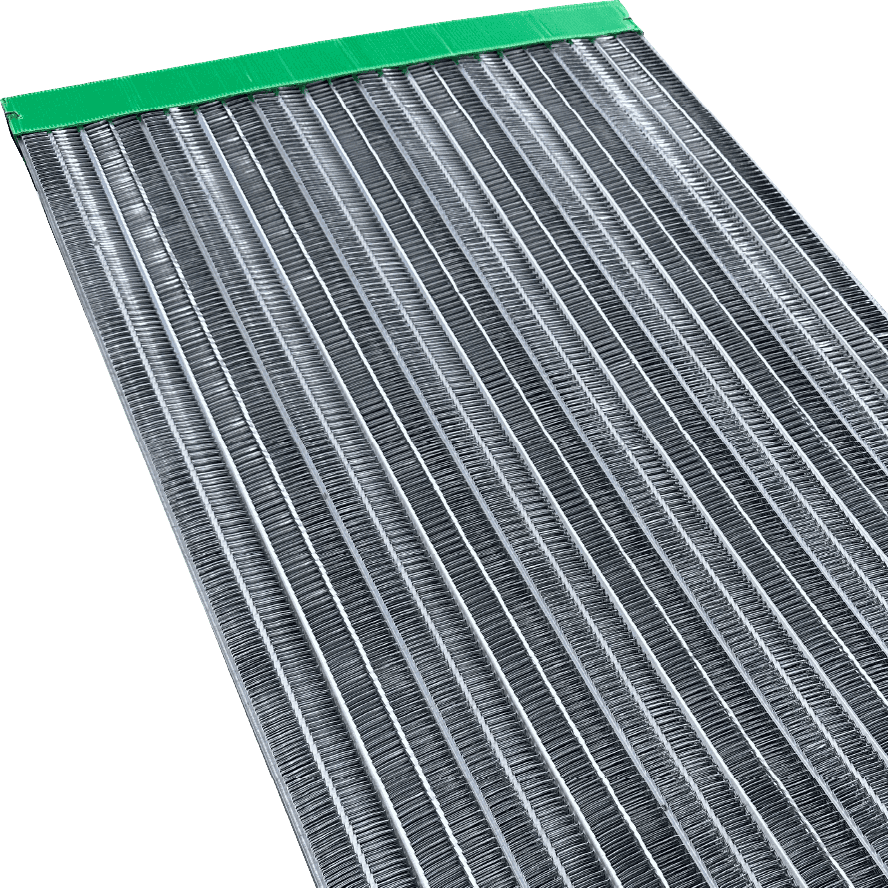
Use as plaster-support mesh
The panel provides a base for traditional, premixed, thermal-insulating or special plasters, indoors and outdoors, on walls and ceilings. Its ribs promote plaster adhesion and help prevent detachment and cracking.
Use as stop-end mesh
As stop-end mesh, Nervoblock acts as permanent formwork for concrete pour joints, composite slabs, curved elements and complex pours. It leaves a rough surface that helps the next concrete pour adhere.
Benefits
• Versatile across two uses: plaster support and stop-end mesh. • Mechanical key for plaster and concrete. • Easy to cut and shape on site. • Corrosion protection from galvanized steel. • Less installation time, cost and consumables (for example, release agents for conventional formwork when used as stop-end mesh). • Low structural weight, also useful in restoration work.
Applications
For plaster support, the panel can carry plaster on steel or timber structures; line ceilings, suspended ceilings and partition walls; repair deteriorated masonry and vaults; support thermal-insulating, sound-absorbing or fire-resistant plasters; and form decorative or architectural elements. As stop-end mesh, it can be used for vertical and horizontal concrete pour joints, earth-retaining or foundation pours, ring beams, beams and columns, complex or curved elements, composite slabs and lightweight sub-base pours.
Who it is for
Construction and renovation companies; building tradespeople (plasterers, bricklayers and external insulation installers); design studios and architects; restorers and building-renovation specialists.
General installation guidance
Nervoblock is fixed to its support with nails, screws, plugs or metal ties, depending on the support. Ribs should be oriented perpendicular to the direction of maximum stress or to promote plaster key. When used as stop-end mesh, it must be fixed adequately to resist the pressure of fresh concrete.